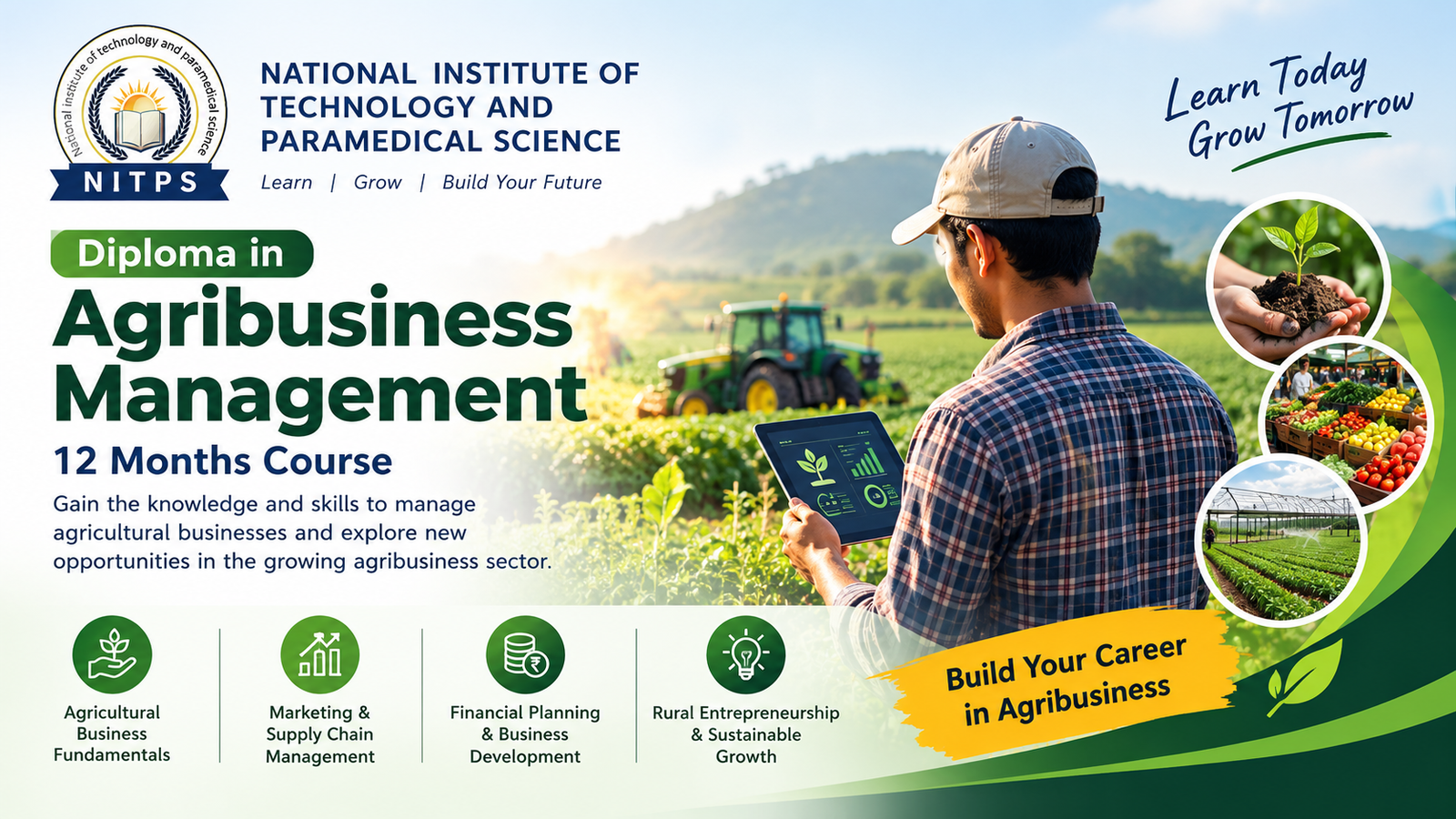
Agriculture is an essential part of the economy, providing food, employment, and business opportunities to millions of people. Today, the agricultural sector extends beyond farming and includes food processing, agricultural marketing, supply chain management, storage, distribution, and rural entrepreneurship. As these activities become increasingly interconnected, knowledge of business management is valuable for individuals who want to explore opportunities in the agriculture industry. A Diploma in Agribusiness Management can help learners understand how agricultural activities are planned, managed, and developed into sustainable business operations.
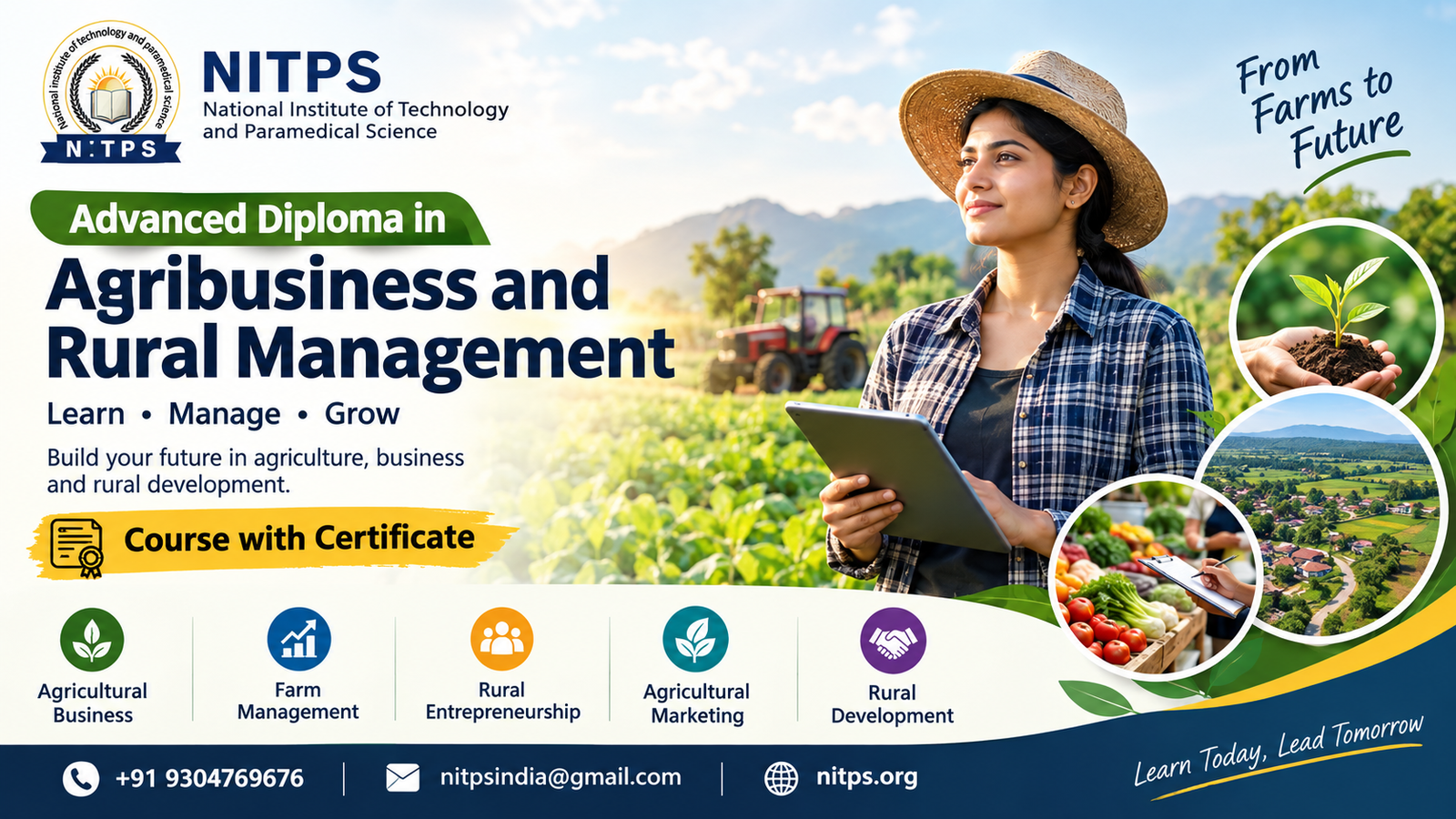
For students and aspiring entrepreneurs looking for a course with certificate, a structured agribusiness program can be a useful starting point for developing knowledge of agricultural markets, business planning, financial management, and enterprise development. NITPS offers a 12-month Diploma in Agribusiness Management for learners interested in understanding the commercial and managerial aspects of agriculture.
What Is Agribusiness Management?
Agribusiness management involves applying business principles to agricultural activities and related industries. It covers the planning, organisation, marketing, and management of businesses connected with farming and agricultural products. These businesses may include seed and fertiliser suppliers, food processing units, agricultural equipment dealers, farm service providers, wholesalers, and agricultural trading enterprises.
Agribusiness management helps learners understand how agricultural products move from farms to markets. It also introduces the importance of production planning, cost control, customer relationships, resource utilisation, and market demand. With this knowledge, learners can better understand the challenges and opportunities involved in managing agriculture-related businesses.
Why Choose a Diploma in Agribusiness Management?
Agricultural businesses require both practical agricultural knowledge and an understanding of commercial operations. Learning the fundamentals of agribusiness management can help individuals explore how farming activities connect with marketing, finance, logistics, and entrepreneurship.
A 12-month diploma program provides a structured opportunity to study the basic concepts of agricultural business management. It may be suitable for students interested in agriculture, individuals from farming backgrounds, and aspiring entrepreneurs who want to learn more about agricultural enterprises.
Choosing a relevant course with certificate can also help learners organise their education around a specific professional interest. Before enrolling, students should check the course syllabus, eligibility requirements, and certificate details to ensure that the program meets their learning and career objectives.
What Will You Learn in an Agribusiness Management Course?
A Diploma in Agribusiness Management can introduce learners to several important areas of agricultural business. The exact subjects depend on the institution's approved syllabus, but common learning areas include the following.
Agricultural Business Fundamentals: Understand the relationship between agriculture, business operations, agricultural markets, and the wider rural economy. This foundation helps learners recognise how agricultural enterprises operate.
Farm and Resource Management: Explore the principles of planning agricultural activities, managing available resources, controlling operating costs, and improving the use of land, labour, equipment, and other inputs.
Agricultural Marketing: Learn about product pricing, customer demand, market research, promotion, and the distribution of agricultural products. Marketing knowledge helps explain how agricultural businesses connect with buyers and identify market opportunities.
Financial and Business Planning: Develop an introductory understanding of budgeting, expense management, business planning, and financial decision-making. These concepts are useful when evaluating the feasibility of a small agricultural enterprise.
Supply Chain and Distribution: Understand the movement of agricultural goods from producers to consumers, including transportation, storage, inventory management, and distribution.
Rural Entrepreneurship: Explore how business ideas can be developed into agriculture-related enterprises. This may include agricultural input services, food processing, farm support services, and local produce trading.
These learning areas can provide a foundation for understanding the business side of agriculture and preparing for further education or relevant professional opportunities.
Career Opportunities After Agribusiness Management Training
Agribusiness offers different types of opportunities across farming, trading, food processing, agricultural services, and distribution. The career path available to an individual depends on their qualifications, practical experience, communication skills, and local employment requirements.
Learners may explore opportunities related to agricultural marketing, farm administration, procurement assistance, agricultural supply chain operations, inventory coordination, and agribusiness support services. Those interested in entrepreneurship may also investigate small businesses involving agricultural products, farm inputs, storage, or food processing.
Individuals from farming backgrounds can use business management knowledge to better understand operating expenses, customer needs, market prices, and sales planning. However, completing a diploma does not automatically guarantee employment or business success. Practical experience, additional qualifications, and an understanding of local agricultural markets remain important.
Who Should Consider This Course?
The Diploma in Agribusiness Management may be relevant to students interested in agriculture and business, aspiring rural entrepreneurs, individuals from farming families, and learners who want to understand agricultural marketing and enterprise operations.
It may also interest people who wish to explore how business planning and management principles can be applied to agricultural activities. Before applying, prospective students should verify the eligibility criteria and confirm that the course content matches their educational background and future goals.
How a Course With Certificate Can Support Skill Development
When comparing a course with certificate, learners should consider more than the course duration. The syllabus, learning objectives, assessment method, admission requirements, and issuing institution are all important factors.
A well-structured educational program can help learners build foundational knowledge in a specific subject area and demonstrate completion of the relevant training, subject to the institution's certification requirements. Students should verify the recognition and acceptance of a certificate before enrolling, particularly if they intend to use it for employment, further study, or professional registration.
For those interested in agriculture-related business activities, agribusiness management training can provide a starting point for understanding business operations, marketing, financial planning, and entrepreneurship.
Why Explore the Diploma in Agribusiness Management at NITPS?
National Institute of Technology & Paramedical Sciences (NITPS) provides educational programs for learners interested in developing knowledge and skills across different subject areas. Its Diploma in Agribusiness Management is intended for individuals who want to explore the business and management aspects of agriculture through a 12-month course.
Prospective students can review the program information to understand the curriculum, admission process, duration, and applicable certification details. Comparing these details with personal learning goals can help students make an informed decision about their education.
To learn more about the program, visit the Diploma in Agribusiness Management – 12 Months page on the NITPS website.
Conclusion
Agribusiness management brings together agriculture, business planning, marketing, finance, and entrepreneurship. Understanding these areas can help learners explore the commercial side of agriculture and identify potential opportunities in agricultural enterprises and rural business development.
The 12-month Diploma in Agribusiness Management at NITPS may be worth exploring for students and aspiring entrepreneurs who want to build foundational knowledge in this field. If you are searching for a course with certificate, review the program's syllabus, eligibility criteria, and certification details before making your decision. Choosing a course that aligns with your goals can be a practical first step towards further learning and professional development in agribusiness.