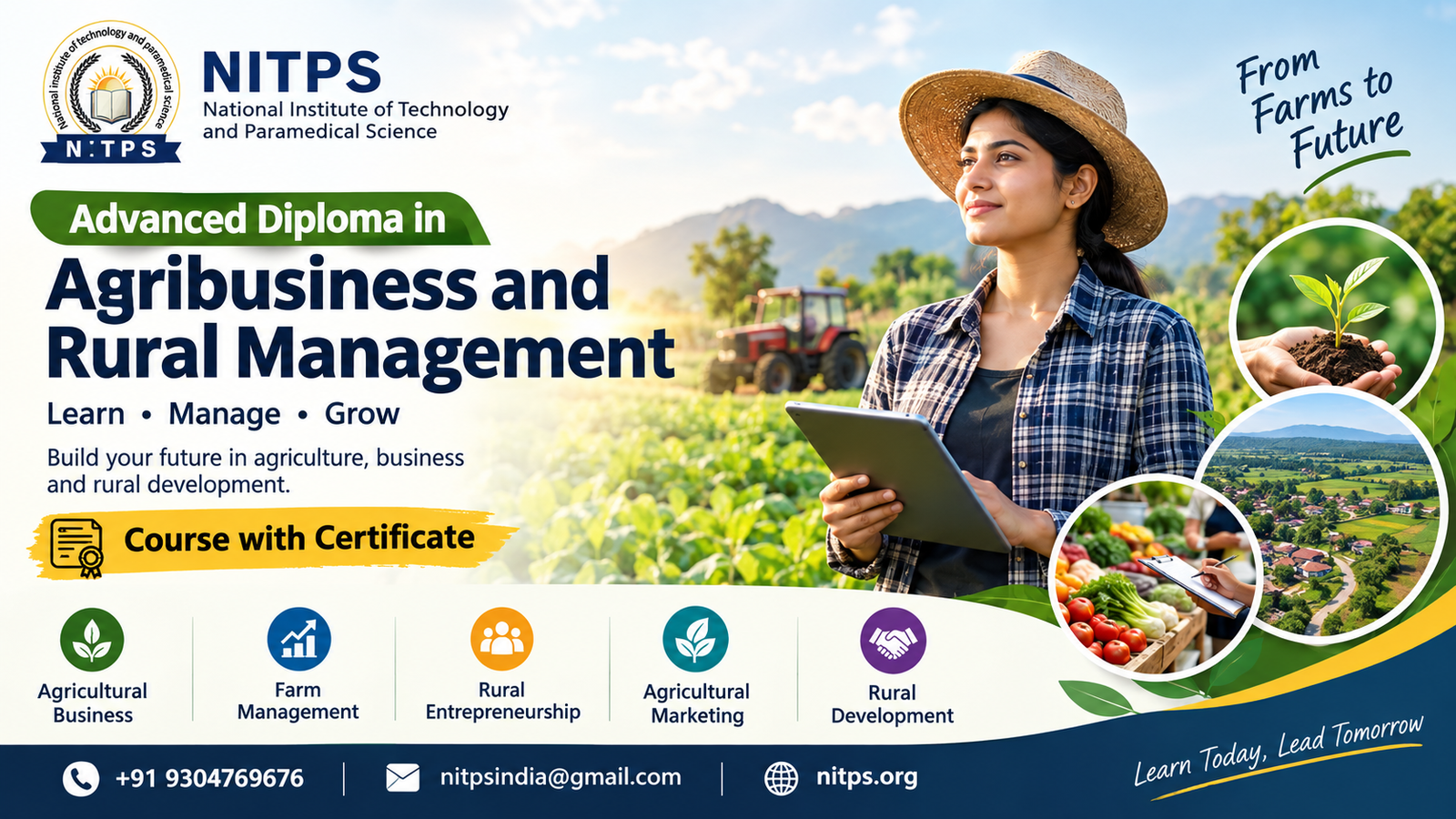
Agriculture is an important part of India's economy, supporting millions of farmers, rural communities, and businesses. With the growth of modern farming methods, agricultural technology, food processing, and agricultural marketing, the agriculture sector is creating opportunities for people interested in both business and rural development. This has increased the importance of agribusiness and rural management education.
The Advanced Diploma in Agribusiness and Rural Management is a study option for learners who want to understand agricultural business operations, farm management, rural entrepreneurship, and the development of rural communities. A two-year programme can help learners build a foundation in the business and management aspects of agriculture while exploring opportunities across agriculture-related industries.
Students looking for a course with certificate can explore relevant educational programmes to develop their knowledge and practical understanding of this growing field. The National Institute of Technology & Paramedical Sciences (NITPS) provides course information for its Advanced Diploma in Agribusiness and Rural Management programme.
Explore the course here: https://nitps.org/course/advanced-diploma-in-agribusiness-and-rural-management-24-months
What Is Agribusiness and Rural Management?
Agribusiness refers to the business activities connected with agriculture, including the supply of farming inputs, crop production, storage, food processing, transportation, distribution, and marketing of agricultural products. It combines agricultural knowledge with business planning, financial management, and customer relations.
Rural management focuses on improving the economic and social development of rural communities. It includes rural entrepreneurship, community development, agricultural support services, resource management, and the implementation of development projects.
Together, agribusiness and rural management help learners understand how agricultural activities can be organised efficiently and how business initiatives can support rural livelihoods.
What Is an Advanced Diploma in Agribusiness and Rural Management?
The Advanced Diploma in Agribusiness and Rural Management is a programme designed for learners interested in agricultural business, farm operations, rural development, and entrepreneurship. The two-year course listed on the NITPS website provides a starting point for individuals who want to explore management-related opportunities connected with agriculture and rural communities.
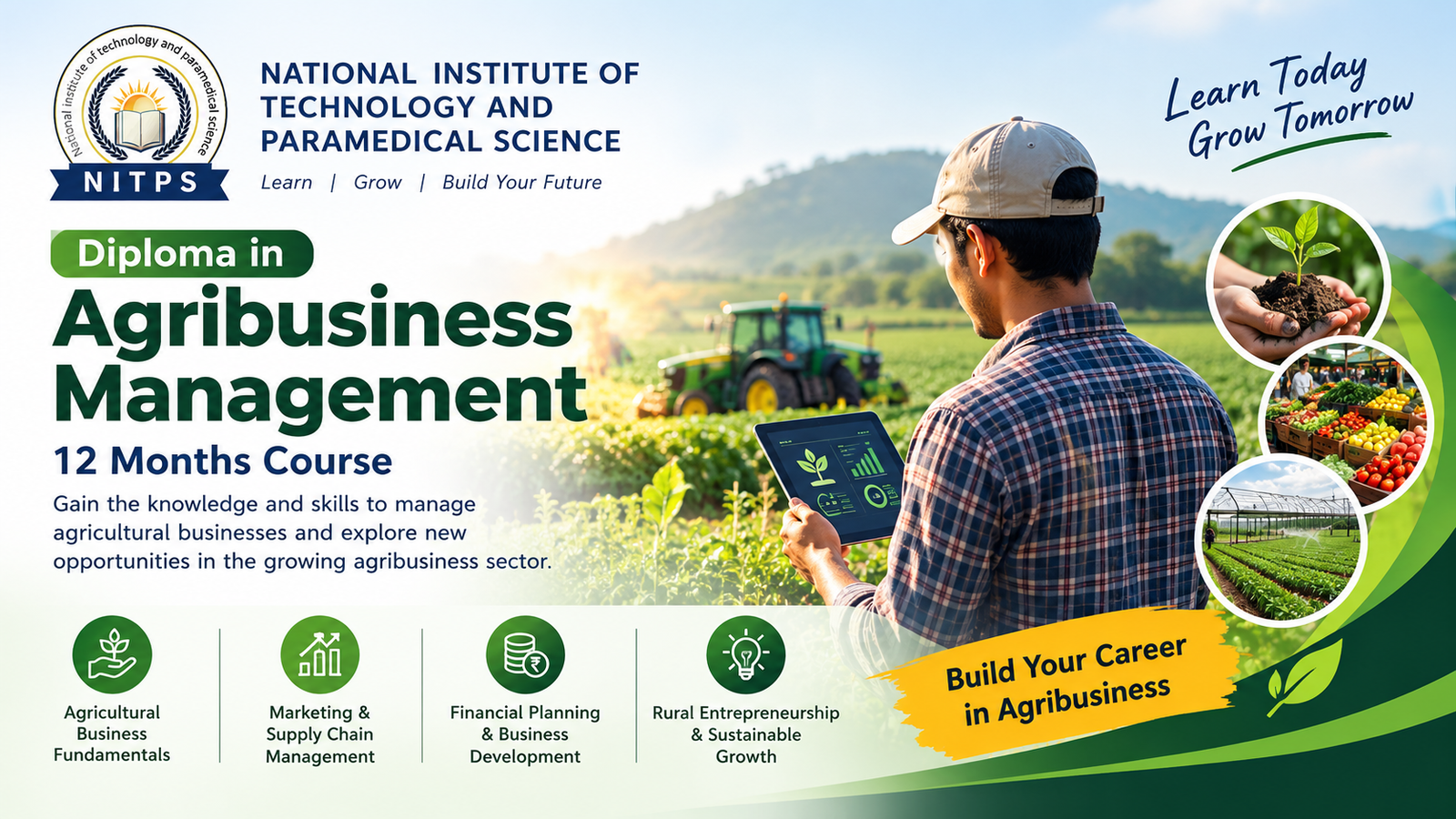
Depending on the curriculum, agribusiness education may cover topics such as agricultural marketing, farm management, supply chain operations, rural enterprise development, agricultural finance, and project planning.
Before enrolling, students should review the official course page to confirm the current syllabus, eligibility requirements, learning format, fees, assessment method, and certificate details.
Why Choose Agribusiness and Rural Management?
Agriculture involves more than growing crops. It also requires effective purchasing, planning, distribution, sales, financial management, and communication with farmers, suppliers, retailers, and customers.
Here are some reasons to consider this field.
1. Growing importance of agricultural businesses
Agricultural businesses require people who understand how products move from farms to markets. Knowledge of agricultural supply chains, storage, and marketing can help learners understand these business operations.
2. Opportunities in rural entrepreneurship
Rural areas offer opportunities for businesses related to agricultural inputs, food products, farm services, livestock, and local supply chains. Management knowledge can help aspiring entrepreneurs evaluate business ideas and plan their operations.
3. Understanding modern agricultural practices
Agriculture is increasingly connected with digital technologies, improved resource management, market information, and modern distribution systems. Learning about these developments can help students understand changes in the agricultural sector.
4. Knowledge of rural development
Rural management introduces learners to the challenges and opportunities faced by rural communities. This understanding can be useful for people interested in development projects, community initiatives, and agricultural support services.
5. A combination of business and agriculture
This field is suitable for learners who are interested in both agriculture and management rather than focusing exclusively on crop production.
What Will You Learn During the Course?
The exact subjects depend on the official curriculum. However, a programme in agribusiness and rural management may introduce learners to the following areas.
1. Fundamentals of Agribusiness
Students can learn how agricultural businesses operate, how agricultural products are produced and distributed, and how different stakeholders contribute to the agricultural economy.
2. Farm and Agricultural Business Management
This area introduces farm planning, resource utilisation, cost management, operational decisions, and ways to organise agricultural activities efficiently.
3. Agricultural Marketing
Agricultural marketing involves understanding consumer demand, product pricing, market channels, promotion, and the distribution of agricultural products.
4. Rural Entrepreneurship and Development
Learners may explore how small businesses can be established in rural areas, how local resources can be utilised, and how entrepreneurship can contribute to employment and economic development.
5. Agricultural Supply Chain Management
Agricultural products need suitable storage, transportation, handling, and distribution. Supply chain knowledge helps students understand how these processes connect farmers with buyers and consumers.
6. Business Planning and Financial Awareness
Business planning involves estimating costs, identifying customers, setting objectives, managing resources, and evaluating the financial requirements of an enterprise.
Students should verify which of these subjects are included in the current NITPS syllabus before making an enrolment decision.
Eligibility for an Agribusiness and Rural Management Course
Eligibility criteria may differ between institutions and programmes. Students should check the official NITPS course page for the specific educational qualifications, minimum requirements, admission process, and documentation needed for the 24-month programme.
Individuals interested in agriculture, rural entrepreneurship, farm management, agricultural marketing, or rural development may find this field worth exploring.
It is important to confirm whether the course is suitable for the student's existing qualification and future educational or employment goals before applying.
Career Opportunities After Agribusiness and Rural Management
Agribusiness connects agriculture with business operations, creating a variety of possible career pathways. Career opportunities depend on the learner's qualifications, practical skills, experience, and the requirements of individual employers.
Potential areas to explore include:
Agribusiness operations: Supporting the daily activities of agricultural businesses, including procurement, planning, and distribution.
Agricultural marketing: Assisting with product promotion, customer relationships, market research, and agricultural sales.
Farm management: Helping organise farm resources, operational activities, and agricultural production planning.
Supply chain and logistics: Exploring work related to agricultural storage, transportation, inventory, and distribution.
Rural development projects: Supporting community programmes, rural livelihood initiatives, and agricultural development activities where qualifications meet the role requirements.
Agricultural entrepreneurship: Developing a business related to farm inputs, agricultural products, food processing, or rural services.
These are potential career directions rather than guaranteed placements. Some positions may require additional qualifications, technical expertise, or relevant work experience.
Can You Start Your Own Agribusiness?
Yes, agribusiness can be a field to explore for aspiring entrepreneurs. However, starting a successful business requires more than completing a course. It also requires market research, financial planning, knowledge of applicable regulations, and an understanding of customer needs.
Possible business ideas include:
- Agricultural input and equipment supply.
- Local sourcing and distribution of agricultural products.
- Fruit and vegetable trading.
- Food processing and packaging.
- Farm-related service businesses.
- Rural retail and agricultural marketing services.
Before starting any venture, aspiring entrepreneurs should evaluate local demand, operating expenses, competition, supply availability, and applicable licences. A business plan can help identify risks and establish realistic goals.
Why Consider a Course With Certificate?
A course with certificate can provide learners with a structured way to study a particular subject and document their course completion, subject to the institution's requirements.
For students interested in agribusiness, a relevant programme may help organise their learning around agriculture-related business concepts, management principles, and rural development.
However, a certificate does not automatically guarantee employment, professional recognition, or eligibility for every job. Students should verify the institution's recognition status, the nature of the qualification, the course content, and its acceptance for their intended purpose.
For the NITPS Advanced Diploma in Agribusiness and Rural Management, review the official programme information before making a decision.
Skills That Can Help You Succeed in Agribusiness
Along with formal learning, several skills can be useful for working in agricultural business and rural management.
- Communication: Building relationships with farmers, suppliers, customers, and business partners.
- Planning and organisation: Coordinating business activities, schedules, and resources.
- Problem-solving: Finding practical solutions to operational and distribution challenges.
- Financial awareness: Understanding costs, budgets, pricing, and business expenses.
- Marketing knowledge: Identifying customers and communicating the value of agricultural products.
- Digital literacy: Using digital tools for record keeping, communication, research, and business coordination.
Developing these skills through practical exposure, internships where available, and real-world projects can complement academic learning.
Who Should Consider This Course?
The Advanced Diploma in Agribusiness and Rural Management may be worth exploring for people who:
- Want to understand the business side of agriculture.
- Are interested in agricultural marketing and supply chains.
- Plan to investigate rural entrepreneurship opportunities.
- Want to learn about rural development and agricultural management.
- Are looking for structured education related to agribusiness.
The best course choice depends on the student's academic background, career plans, and the recognition or qualification requirements relevant to their goals.
Frequently Asked Questions
1. What is an Advanced Diploma in Agribusiness and Rural Management?
It is a programme focused on the management and business aspects of agriculture and rural development. The specific subjects and qualification details depend on the institution's curriculum.
2. What is the duration of the NITPS programme?
The NITPS course page identifies the programme as a 24-month course. Students should check the official website for current admission and course details.
3. Can I start a business after studying agribusiness?
The knowledge gained may help you explore agricultural business ideas. However, success depends on market demand, business planning, available resources, practical experience, and compliance with relevant regulations.
4. What career opportunities are available after this course?
Possible areas include agricultural marketing, agribusiness operations, supply chain support, farm management, rural development projects, and entrepreneurship. Specific roles depend on qualifications and employer requirements.
5. Where can I find the course details?
Visit the official NITPS course page to review the available information:
https://nitps.org/course/advanced-diploma-in-agribusiness-and-rural-management-24-months
Conclusion
Agribusiness and rural management bring together agriculture, business planning, marketing, resource management, and rural development. For learners interested in these areas, an advanced diploma programme may provide a structured starting point for understanding agricultural business operations and exploring future opportunities.
If you are looking for a course with certificate related to agribusiness and rural management, explore the Advanced Diploma in Agribusiness and Rural Management offered on the NITPS website. Review the curriculum, eligibility criteria, certificate details, and other official information carefully to determine whether the programme matches your educational and professional goals.