
Diploma In Library And Information Science
Diploma In Library And Information Science
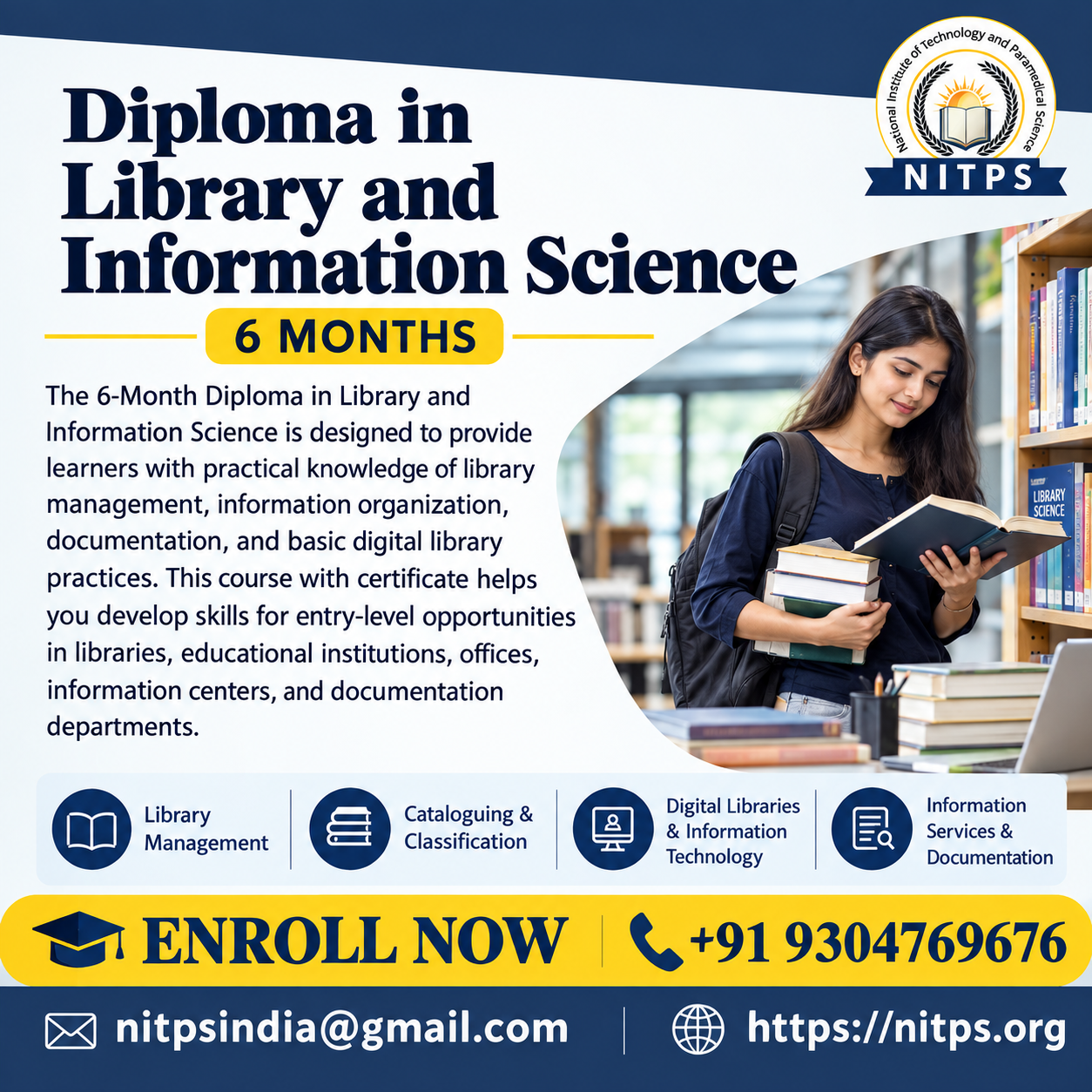
The 6-Month Diploma in Library and Information Science is designed to provide learners with practical knowledge of library management, information organization, documentation, and basic digital library practices. This short-term program helps students understand how books, journals, documents, and digital resources are classified, catalogued, stored, and made accessible to users. As a course with certificate, it can be useful for learners looking to develop skills for entry-level opportunities in libraries, educational institutions, offices, information centers, and documentation departments.
The Diploma in Library and Information Science covers the fundamental concepts and practical aspects of managing library and information resources. During this course with certificate, learners can develop an understanding of library organization, classification, cataloguing, reference services, documentation, and information management.
Introduction to Library and Information Science
Students learn the basic concepts, objectives, functions, and importance of libraries and information centers. The module introduces different types of libraries, their roles, and the services they provide to students, researchers, professionals, and the general public.
Library Management
This section focuses on the principles of library administration and day-to-day library operations. Learners understand collection management, library organization, record maintenance, circulation services, and basic procedures used for efficient library management.
Classification of Library Resources
Students are introduced to the basic principles of classifying books and other information resources. The course explains how library materials can be organized systematically to make them easier to locate and access.
Cataloguing
Learners study the fundamentals of cataloguing and bibliographic description. This includes understanding how information about books, journals, documents, and other resources is recorded and organized for easy retrieval.
Reference and Information Services
This module explains how libraries assist users in finding relevant information. Students learn about reference resources, user assistance, information retrieval, and basic techniques for responding to information requirements.
Library Collection Development
The course introduces methods of selecting, acquiring, organizing, maintaining, and evaluating library materials. Students gain an understanding of how libraries develop useful and relevant collections based on users' needs.
Digital Library and Information Technology
Learners are introduced to the role of computers and digital technologies in modern libraries. The module covers basic concepts related to digital resources, electronic information, online databases, digital library services, and computerized library operations.
Documentation and Information Management
Students learn the fundamentals of documenting and managing information resources. The course explains methods of organizing information so that it can be efficiently stored, retrieved, and shared.
Preservation and Maintenance of Library Materials
This section focuses on the basic care and preservation of books, documents, journals, and other library resources. Learners understand common methods used to protect library collections from damage and deterioration.
Practical Library Training
Practical learning helps students understand the application of library and information science concepts in real-world environments. Learners can gain exposure to basic library procedures, resource organization, cataloguing, circulation, and information services.
Career-Oriented Learning
The 6-Month Diploma in Library and Information Science provides foundational knowledge that can support learners interested in library-related and information-management roles. The course with certificate can add a formal qualification to a learner's educational profile while developing practical knowledge relevant to libraries and information centers.