
Diploma In Library And Information Science
Diploma In Library And Information Science
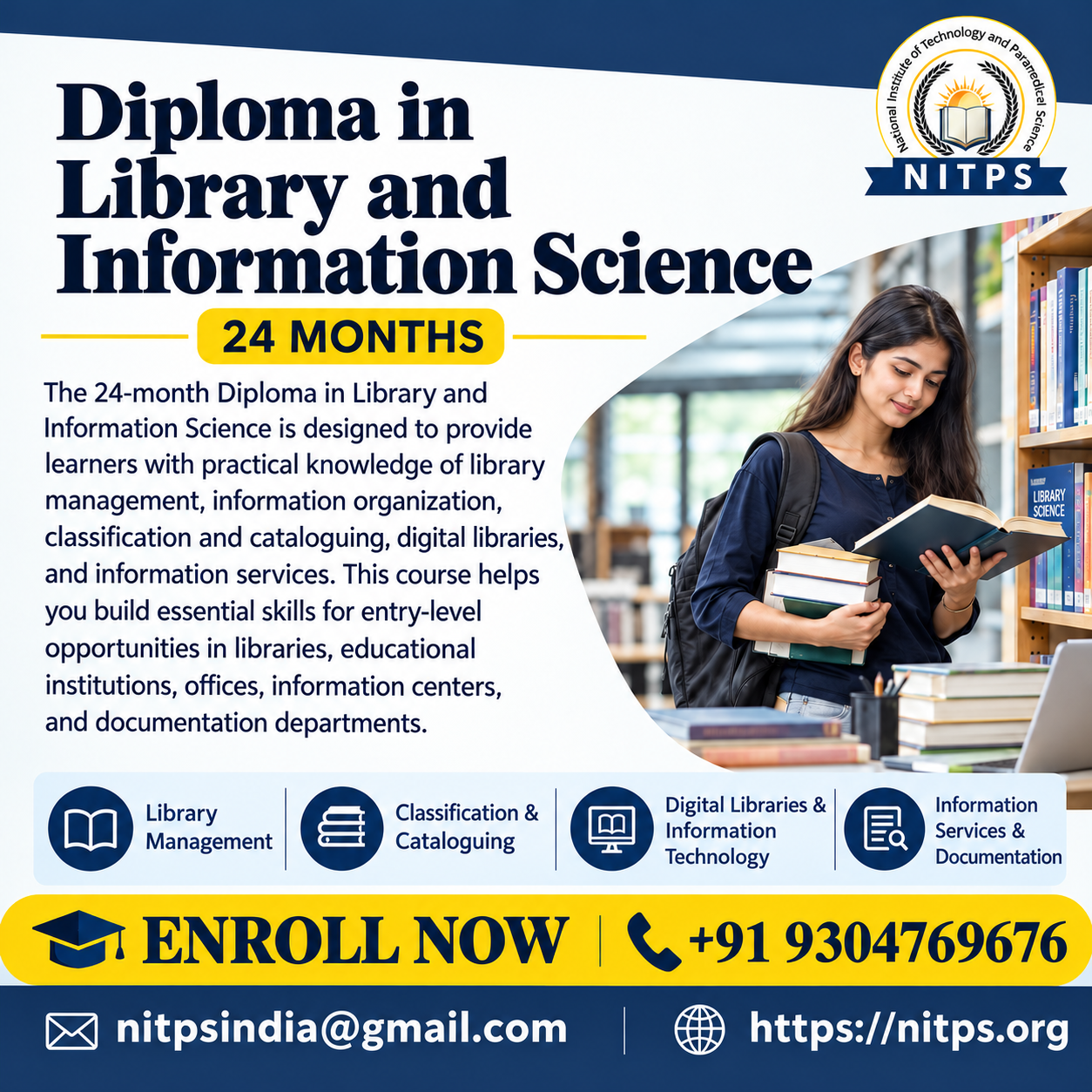
The Diploma in Library and Information Science – 24 Months at NITPS is a comprehensive, career-oriented program designed for learners who want to develop strong knowledge and practical skills in library management, information organization, documentation, cataloguing, classification, digital libraries, and information technology. This course with certificate provides an extended learning structure that allows students to build a deeper understanding of traditional and modern library practices while developing the skills required to manage physical and digital information resources effectively. The program introduces learners to the complete functioning of libraries and information centres, from collection development and resource organization to reference services, preservation, automation, and digital information management. As libraries increasingly use computers, electronic databases, online catalogues, e-books, e-journals, and digital repositories, students also gain an understanding of technology-enabled library services. NITPS provides career-focused learning opportunities for students and professionals seeking knowledge in Library and Information Science
The Diploma in Library and Information Science – 24 Months at NITPS is a comprehensive and career-oriented program designed for learners who want to develop knowledge and practical skills in library management, information organization, documentation, cataloguing, classification, reference services, library automation, and digital information management. This course with certificate provides a structured learning pathway for students who want to understand both traditional library practices and modern technology-based information services. The program is suitable for learners interested in developing professional knowledge for opportunities in libraries, schools, colleges, educational institutions, information centres, documentation centres, research organizations, and digital library environments.
The program begins with the Fundamentals of Library and Information Science, helping learners understand the concept, history, objectives, functions, development, and importance of libraries and information services. Students gain an understanding of how libraries support education, research, knowledge sharing, and information access. As a course with certificate, the program is designed to provide learners with comprehensive subject knowledge while developing an understanding of the practical functioning of modern libraries.
Library Management and Administration is an important part of the program. Learners study library planning, organization, administration, staff management, budgeting, collection management, library policies, records, and day-to-day library operations. This knowledge helps students understand how library resources and services can be effectively managed to meet the information needs of users.
The Library Classification and Cataloguing components focus on the systematic organization and description of information resources. Students learn how books, documents, journals, and other resources can be classified and arranged for easy identification and retrieval. They also develop an understanding of cataloguing principles, bibliographic records, resource description, and catalogue organization. These skills form an important foundation for anyone pursuing a course with certificate in Library and Information Science.
The program also covers Library Collection Development and Management, where learners study the selection, acquisition, evaluation, organization, maintenance, and management of books, periodicals, reference materials, electronic resources, and other information sources. Students learn how library collections can be developed according to the educational, research, and information requirements of different users.
Through Reference and Information Services, learners develop an understanding of how to assist users in finding relevant and reliable information. The subject introduces reference sources, information services, user assistance, current awareness services, information retrieval, and research-support techniques. These concepts help students understand the role of library professionals in providing efficient information services.
The Documentation and Information Management component teaches learners how information can be collected, recorded, organized, stored, retrieved, and communicated effectively. Students gain knowledge of documentation practices and information management techniques that can be useful in libraries, educational organizations, research institutions, offices, and information centres.
Modern libraries increasingly depend on technology, so the program gives significant importance to Information Technology, Library Automation, and Digital Library Management. Learners develop an understanding of computerized library operations, online catalogues, electronic databases, e-books, e-journals, digital collections, digital repositories, and technology-enabled information services. This makes the course with certificate relevant for learners who want to develop knowledge of both conventional library systems and modern digital information environments.
The program also includes Preservation and Conservation of Library Resources, helping students understand the proper care, maintenance, storage, and protection of books, documents, journals, manuscripts, and other library materials. Learners gain knowledge of basic preservation practices that help maintain valuable information resources for long-term use.
The 24-month Diploma in Library and Information Science provides learners with an extended opportunity to develop knowledge across library administration, classification, cataloguing, collection development, documentation, reference services, information retrieval, library automation, digital libraries, and resource preservation. As a course with certificate, it can help learners build a strong academic foundation and improve their understanding of professional library and information services.
After completing the program, learners may explore opportunities related to library services, documentation, information management, digital library support, and library operations in schools, colleges, educational institutions, libraries, documentation centres, research organizations, information centres, archives, and other relevant organizations, subject to applicable qualification and recruitment requirements.
If you are searching for a course with certificate that combines fundamental Library and Information Science concepts with library management, classification, cataloguing, information technology, automation, documentation, and digital library knowledge, the Diploma in Library and Information Science – 24 Months at NITPS offers a comprehensive learning pathway for developing relevant knowledge and professional skills.